Showing posts with label water. Show all posts

Sunday, July 21, 2013

Vietnamese Updates: VAST NANO Technology - solution for treatment of arsenic in water (10 Jul 2013)


VAST NANO Technology - solution for treatment of arsenic in water 
Thứ tư, ngày 10 tháng 07 năm 2013 cập nhật lúc 04:02


Arsenic contamination in ground water is increasing; recently, scientists in the Inorganic Chemistry Department- Institute forChemistry Studies have studied and applied Nano VAST technology for treatment of arsenic and mental in water. This is considered to be an effective economic and secured solution.

Arsenic contamination of groundwater in Vietnam is dangerous problem. According to the WHO, approximately 15 million people in Vietnam(nearly one fifth of the population) may face the potential risk of arsenic poisoning because of using polluted water which is not thoroughly treated. The level of pollution in Ha Nam, Hanoi, Hung Yen, Ha Tay, Vinh Phuc, Long An, Dong Thap, An Giang and Kien Giang is particularly high. Therefore, the removal of arsenic and heavy metals in water became urgent needs. It requires an effective and suitable technologysolution consistent with Vietnam's practice.

In Vietnam, the study of arsenic removal for water has been carried out for long, however, in general there is no technology or material whichproved its dominance in treating arsenic in water in both family scale and industry scale. Oxidization and treatment of manganese and iron in groundwater is the main technology. This classic technology removes a small amount of arsenic in water.

Layouts of the Nano VAST technology
To find a solution for arsenic treatment, recently, scientists in Department of Inorganic Chemistry - Institute for Chemistry Studies hassuccessfully built a water treatment system for arsenic and heavy metal contamination using Nano VAST technology. This technology uses twotypes of advanced arsenic adsorbents of  NC- F20 and NC- MF which are produce in Vietnam. NC- F20 and NC- MF’s dominantadvantage is that adsorption is at a fast pace with very high capacity.  

Nano Vast system has been deployed in a clinic in Nhan Khang commune, Ly Nhan, Ha Nam district. The system is able to remove arsenic from200 ppb to less than 5 ppb (standard is 10 ppb) with a capacity of 1.5 m3 per hour. The system is designed in two modes and easy to adjust automatically or manually. Up to now, Nano Vast system has been developed and replicated in many localities with a capacity of 0.8 m3/h,1.2 m3 / h and 1.5 m3 / h.

(a) Nano VAST system with a capacity of 1.5 m3 / h was installed in a clinic in Nhan Khang commune, Ly Nhan, Ha Nam province (b) Nano VAST system with a capacity of 1.2 m3 / h treating arsenic contaminated water has been installed in Trung Yen - Ha Noi
 Mr. Pham Van Lam - Department of Inorganic Chemistry Institute for Chemistry Studies, manager of research project said that the disadvantage of the Nano VAST which is connected with common pretreatment system (oxidation, sedimentation, filtration) system is that the system stillgenerates solid residue (in the tank) contain high concentrations of arsenic.  The costs will be increased because of expensive equipments.Currently, with the desire to limit these disadvantages, scientists connect Nano VAST technology with SAR technology (Subterranean ArsenicRemoval).  If this experiment successes, it will pave the way for a promising new direction in the field of water treatment to ensure safetyfor the community. It also creates a foundation for a flexible, high efficient, save and environmentally friendly technology.

T.Minh

Source: 

Thursday, July 18, 2013

Events: World Water Week: Eye on Asia organized by ADB from 1-6 Sep 2013

World Water Week: Eye on Asia
Stockholm, Sweden : 1 September 2013 - 6 September 2013

Description
Since 2008 during World Water Week, ADB and its partners have been organizing "Eye on Asia," a day-long set of activities that promote a better understanding of water issues in the region and the efforts of governments and development agencies to address them.

World Water Week, hosted and organized by the Stockholm International Water Institute, has been the annual focal point for the globe's water issues since 1991. Each year, World Water Week addresses a particular theme to enable a deeper examination of a specific water-related topic. The theme for 2013 is "Water Cooperation - Building Partnerships."

ADB's Eye on Asia event this year, on Tuesday 3 September, will focus on partnerships for water security with "New players, smarter rules, better outcomes." ADB's Asian Water Development Outlook 2013 shows that water security in much of the region is low and urgent action is required. Eye on Asia will mobilize leading stakeholders from Asia and the Pacific regions to examine different perspectives, identify water management options, and build new partnerships to advance water security for all.

Objectives
Eye on Asia aims to help participants understand how proactive action can move the water security agenda forward in the basins of the region, and that by building bridges between diverse groups, and sometimes conflicting objectives, new synergies can be obtained.

Organizers
Eye on Asia is organized by ADB, Asia-Pacific Water Forum (APWF), International Center for Integrated Mountain Development (ICIMOD), Global Water Partnership (GWP) and WWF.

Participants
Political leaders, government agencies, private sector, civil society, academia, media, development partners and investors will be invited to participate.

Sunday, July 7, 2013

Events: Water Seminar II: Less is More organized by Civic Exchange on 30 Jul 2013

Water Seminar II: Less is More


Civic Exchange is organising “Water Seminar II: Less is More” on 30 July 2013. Ms. Su Liu (Head of Greater China & Water Policy Research, Civic Exchange) will present her new research findings examining water issues under one country two systems. Renowned speakers will then lead us to discussions on Hong Kong’s water price, water self-sufficiency and urban ecological security, as well as Civil society’s role in Hong Kong’s water issues.


Details:
Date: 30 July 2013 (Tuesday)
Time: 2:00 – 6:00pm
Venue: The Boys’ & Girls’ Clubs Association of Hong Kong
Address: Room 502, Lecture Hall, 3 Lockhart Road, Wanchai, Hong Kong
Language: English
Registration: This event is free of charge but registration is needed.

For more information: http://www.civic-exchange.org/wp/130730waterseminar/#more-18263

Talks: Under the "Science in the Public Service" Campaign, a series of talks on popular science are organized from July to September 2013

Science in the Public Service

Science in the Public Service

Under the "Science in the Public Service" Campaign, a series of talks on popular science are organized from July to September 2013. The talks will be conducted in Cantonese. Admission is free and on a first-come, first-served basis. Details of the talk are as follows:

  
Date:20 July 2013 (Saturday)
Time:3:00pm - 5:00pm
Time andTopic:
(1)3:00-4:00pm
 Modern-day Dayu Tames the Water - Flood Prevention Strategy in Hong Kong
 Mr. Tsui Wai, Deputy Director
Drainage Services Department
(2)4:00-5:00pm
 Is Climate Change Predictable ?
 Mr. Tong Hang-wai, Scientific Officer, Hong Kong Observatory
Venue:Lecture Hall, Museum of History, Tsim Sha Tsui East, Kowloon
  
 
Date:27 July 2013 (Saturday)
Time:3:00pm - 5:00pm
Time andTopic:
(1)3:00-4:00pm
 Implications of Climate Change on Coastal Structures
 Mr. IP Wai-man, Raymond, Senior Engineer, Civil Engineering and Development Department
(2)4:00-5:00pm
 Carbon Footprint and Carbon Auditing
 Mr. Eddie LEE and Ms. Sally LEE, Environmental Protection Officers, Environmental Protection Department
Venue:Lecture Hall, Museum of History, Tsim Sha Tsui East, Kowloon
  
 
Date:3 August 2013 (Saturday)
Time:3:00pm - 5:00pm
Topic:
(1)3:00-4:00pm
 When Hillsides Collapse • The Slope Safety of Hong Kong
 Ms. LUI Lok-sum Becky, Senior Geotechnical Engineer, Civil Engineering and Development Department
(2)4:00-5:00pm
 Building Maintenance Safeguards Your Home against Severe Weather Conditions
 Mr. FUNG Kin Yip Tom, Structural Engineer, Buildings Department
Venue:Lecture Hall, Hong Kong Science Museum, Tsim Sha Tsui East, Kowloon
  
 
Date:10 August 2013 (Saturday)
Time:3:00pm - 5:00pm
Topic:
(1)3:00-4:00pm
 Air Pollution in Hong Kong
 Dr. LAM Ka-se, Associate Professor, Department of Civil and Environmental Engineering, The Hong Kong Polytechnic University
(2)4:00-5:00pm
 Seeing the Link Between Air Pollution and the Weather through the Lens of a Computer Model
 Dr. Christopher FUNG, Senior Environmental Protection Officer, Environmental Protection Department
Venue:Lecture Hall, Hong Kong Science Museum, Tsim Sha Tsui East, Kowloon
  
Date:17 August 2013 (Saturday)
Time:3:00pm - 5:00pm
Topic:
(1)3:00-4:00pm
 Air Ventilation and Town Planning in Hong Kong
 Ms. Paulina PUN, Senior Town Planner/Urban Design, Planning Department
Dr. Alice CHEUNG, Air Ventilation Assessment Advisor, Planning Department
(2)4:00-5:00pm
 Hong Kong Satellite Positioning Infrastructure and its Applications
 Mr. KWOK Chi Wo Simon, Chief Land Surveyor, Lands Department
Venue:Lecture Hall, Hong Kong Science Museum, Tsim Sha Tsui East, Kowloon
  
Date:14 September 2013 (Saturday)
Time:3:00pm - 5:00pm
Topic:
(1)3:00-4:00pm
 Climate Change and Food Safety
 Dr. TANG Shiu Ping Anna, Scientific Officer, Centre for Food Safety, Food and Environmental Hygiene Department
(2)4:00-5:00pm
 Weather and Influenza in Hong Kong
 Mr. MOK Hing-yim, Senior Scientific Officer, Hong Kong Observatory
Venue:Lecture Hall, Hong Kong Science Museum, Tsim Sha Tsui East, Kowloon

For more information: http://www.science.gov.hk/eng/info-talks.htm

HK's Updates: Grading of beach water quality released (5 Jul 2013)

Environmental Protection Department The Government of the Hong Kong Special Administrative Region
Press Release
Grading of beach water quality released
The Environmental Protection Department (EPD) today (July 5) released the latest grading of water quality of 37 beaches.

Nineteen beaches were rated as Good (Grade 1)and eighteen were rated as Fair (Grade 2).

Grade 1 beaches are: 
Big Wave Bay Beach
Cheung Chau Tung Wan Beach
Chung Hom Kok Beach
Deep Water Bay Beach
Discovery Bay*
Hap Mun Bay Beach
Hung Shing Yeh Beach
Kiu Tsui Beach
Kwun Yam Beach
Lo So Shing Beach
Middle Bay Beach
Repulse Bay Beach
Shek O Beach
South Bay Beach
St. Stephen's Beach
Stanley Main Beach
Trio Beach
Turtle Cove Beach
Upper Cheung Sha Beach

Grade 2 beaches are: 
Approach Beach
Butterfly Beach
Cafeteria New Beach
Cafeteria Old Beach
Casam Beach
Castle Peak Beach
Clear Water Bay First Beach
Clear Water Bay Second Beach
Golden Beach
Hoi Mei Wan Beach
Kadoorie Beach
Lido Beach
Lower Cheung Sha Beach
Ma Wan Tung Wan Beach
Pui O Beach
Silver Mine Bay Beach
Silverstrand Beach
Tong Fuk Beach

The beach with an asterisk is a non-gazetted beach. All gazetted beaches are equipped with shark nets.

A summary of beach grades is published weekly before the weekend. Latest beach grades based on the most current data may be obtained from the department's websites on Beach Water Quality (www.beachwq.gov.hk or www.epd.gov.hk/epd/beach) or the beach hotline, 2511 6666.

Compared with the grading released last week, Big Wave Bay Beach, Deep Water Bay Beach, Hap Mun Bay Beach and Middle Bay Beach have been upgraded from Grade 2 to Grade 1. Approach Beach has been upgraded from Grade 3 to Grade 2. Tong Fuk Beach has been changed from Grade 1 to Grade 2.

"The change is generally within the normal range of fluctuation of the bacteriological water quality of the beach," an EPD spokesman said.

Under our present grading system, beaches are classified into four grades according to the level of E. coli in the water.

Grades are calculated on the basis of the geometric mean of the E. coli counts on the five most recent sampling occasions.

Grade 4 is assigned to beaches whose last E. coli reading exceeded a threshold figure, irrespective of the geometric mean. Swimmers are advised to avoid these beaches until the water quality improves.
People are advised not to swim at the closed beaches.

The EPD spokesman warned that many beaches were likely to be more polluted than their grades suggested during and after periods of heavy rain. Bathers should avoid swimming at beaches for up to three days after a storm or heavy rainfall.

Ends/Friday, July 5, 2013

Saturday, June 29, 2013

Publication: 2012 Report on the State of Environment in China (in Chinese only) by China Water Risk (Jun 2013)

China Water Risk

2012 Report on the State of Environment in China (in Chinese only) 

Source: Ministry of Environmental Protection, 2013

Download the report in: http://www.mep.gov.cn/gkml/hbb/qt/201306/W020130604382172090857.pdf
For more information: http://chinawaterrisk.org/resources/research-reports/china-government-reports/

Wednesday, June 26, 2013

Vietnamese Updates: Efforts to save Dong Nai River (20 Jun 2013)


Heavilly-polluted Dong Nai river

Efforts to save Dong Nai River 

Thứ năm, ngày 20 tháng 06 năm 2013 cập nhật lúc 04:09

Environmental basin of the Dong Nai river system has a special importance forsustainable development in 11 provinces, including Ho Chi Minh City, DongNai, Binh Duong, Binh Phuoc, Ba Ria - Vung Tau, Lam Dong , Dak Lak, NinhThuan, Binh Thuan, Tay Ninh, Long An. The Dong Nai river system supplieswater for living and agricultural and industrial production. At the same time,Dong Nai river system receives agricultural, industrial and hospital waste waters and part of solid urban waste. However, the water pollution in the riverbasin is increasing at an alarming rate. Therefore, the environment protection in the Dong Nai River is an urgent problem nowadays.

The latest data monitored by the Center of Dong Nai Environment Engineering andMonitoring in more than 100 sites in rivers, streams and lakes in the province ofDong Nai has showed that in many places, water is heavily contaminated. It isestimated that urban areas and businesses along the basin of Dong Nai river systemrelease approximately 5 million m3 of waste water  per day with a total of 600,000kgBOD, 1.1 million kg COD, 200.000kg nitrogen, and 760,000kg SS. Therefore, DongNai river’s water quality can not meet standards of water supply for daily life. Especially, the Thi Vai river’s water sources do not meetstandards for aquaculture production.

To minimize pollution on Dong Nai River, in 2003, the former Minister of Natural Resources and Environment Mai Ai Truc met leaders of 11 provinces to make immediate measures to restore Dong Nai River’s environment. Many solutions to improve water quality in the river havebeen carried out, The Prime Minister has signed Decision N. 187 on environmental protection of Dong Nai river system to 2020. According to this Decision, the provinces in the river basin to the year 2010 have improved effectively environment quality and water quality of the Dong Nai river system. Specifically, 80% of industrial zone, export processing zones collected 90% of domestic waste, 90% of industrial solid waste, 70% of hazardous waste and 100% of medical waste. To achieve this goal, the total cost will be 2,000 trillion. Currently, the Ministry of Natural Resources and Environment is also trying to protect the basin of the Dong Nai river system by submitting to theGovernment a draft decree promulgating the list of prohibited and restricted investment areas on river basins. At the same time, the Ministry proposed to find the measures to improve the human resources and management mechanisms.

In addition to the above policies, according to Deputy Minister of Natural Resources and Environment Bui Cach Tuyen, provinces and cities in the basin in the basin should urgently build implementation plan and allocate adequate funds to accelerate construction of treatment facilities of wastewater, solid waste in urban areas, industrial zones and industrial clusters. In particular, it is urgently to unify coordination mechanism among provinces and cities in the basin, avoiding the conflicts in the basin. To do this, the Dong Nai river system would be escaped from pollution.

Mai Chi

Source: 

Wednesday, June 12, 2013

New Books: Vulnerability Assessment of Freshwater Resources to Climate Change: Implications for Shared Water Resources in the West Asia Region by UNEP (2013)

Vulnerability Assessment of Freshwater Resources to Climate Change: Implications for Shared Water Resources in the West Asia Region 


Vulnerability Assessment of Freshwater Resources to Climate Change: Implications for Shared Water Resources in the West Asia Region provides a useful tool for decisi on-makers to identify potential risks to freshwater resources in the region from the impacts of climate change.

Already a major constraint to socio-economic development, water stress in West Asia is expected to deepen due to the impacts of climate change. Understanding the vulnerability of water systems in West Asia, therefore, is vital to sustainable water resource management in the region.

The approach employed in this assessment recognizes that a sustainable freshwater system can only function within an integrative operational framework that combines both the natural and management processes.

The assessment concludes that political action is needed to ensure sustainable management of water resources, with vulnerability and adaptation to climate change integrated into future national plans. It recommends that resource management policies shift to demand management, water use efficiency and conservation.

Year of Publication: 2013

Author: UNEP

ISBN No: 978-92-807-3292-4


Number of Pages: 164

Website :click here

For more information: 

Sunday, June 9, 2013

Publication: Long Term Electricity Scenario And Water Use: A Case Study On India (4 Jun 2013)

Long Term Electricity Scenario and Water Use: A Case Study on India
Policy Brief

Long Term Electricity Scenario And Water Use: A Case Study On India


Author: Mitra, Bijon Kumer and Bhattacharya, Anindya|2012/07|Number 20. p.8.|Publisher: IGES(Hayama, Japan)
Language: English|Publication Type: Policy Brief|Copyright: IGES


This policy brief focused the seriousness of water energy nexus from long-term perspective especially in the water scarce countries like India. It deals with India as a case study country. The findings reveal that the integrated water-energy policies are essential for sustainable development in the water scarce countries.

Keywords:

Geographic area:

Download:
File nameSize
PB_20_E_final.pdf1.9 MB


For more information: http://enviroscope.iges.or.jp/modules/envirolib/view.php?docid=4089

Vietnamese Updates: Saving rivers and lakes of Hanoi – responsibility of all individuals! (10 May 2013)


Saving rivers and lakes of Hanoi – responsibility of all individuals!

Thứ sáu, ngày 10 tháng 05 năm 2013 cập nhật lúc 04:11


Hanoi can be understood as "the River City", due to the fact that the four sides of Hanoi are surrounded by large rivers such as To Lich river, Lu river, Set river, Kim Nguu river and Nhue river... However, at the moment, most of these rivers are contaminated.  It is difficult for a  "green capital" to be shaped when the lakes are shrinking and darkening because of garbage and other pollution sources.
The rivers are "dying"


According to statistics by the Center for Environmental Research & Community in 2010, there are 120 lakes, ponds, and marshes in various sizes in six districts of Hanoi. Most of the lakes are polluted with organic substance. 71% of lakes in Hanoi possess biochemical factors that are beyond the permitted standard, in which 14% is full of organic chemical pollutants, 25% is under severe polluted condition and 32% shows sign of contamination.

The severe pollution situation in Lich River has lasted many years and so far, which is still the unsolved problem of the authorities. Lich River is where the rainfall and all sorts of untreated sewage of the city (domestic sewage, hospital sewage, industrial waste water...) and the dirty water from the river Taurus, Lu River flow to.

Set river, which flows through Bach Khoa and Truong Dinh district also suffered the same situation as To Lich River. Over the years, the riverbed has gradually grown shallow, thick, dark and always evaporates stinky smell...
According to an investigation by the Department of Natural Resources - Environment and Housing the total amount of domestic sewage and industrial wastewater in the urban area are estimated at ​​about 500,000 m3/day, which will drain through the drain system including the four rivers, namely To Lich, Lu, Set, Kim Nguu. The proportion of in the wastewater containing untreated contaminants from production activities, hospitals and service facilities accounts for 90% of industrial and service wastewater discharged into surface water. There are currently only 40 industrial establishments, 29 service establishments and 5 hospital having wastewater treatment plants in Hanoi. This has brought the river to extremely polluted condition.

Efforts to regenerate lakes
Hanoi authority has carried out measures and sought solutions to overcome environmental pollution in rivers and lakes around the city and improve the situation from the 80s of the last century. In addition, the United Nations has put forward aid projects to renovate To Lich River, mobilized thousands of youth and students in Hanoi to participate in the dredging and renovation of the river, turning it into a scenic spot serving tourism. Nevertheless, the work was left unfinished. Later, when the city and embanked and dredged the river, the pollution still remained unsettled for contaminated wastewater had not been treated. In 1954, the population of Hanoi city was only about 35 thousand hence wastewater and garbage were still rare. As it approached 21st century, the process of urbanization, population in Hanoi boosted rapidly while infrastructure could not be improved, sewage and garbage grew ever-ample, which results in the lakes’ insufficient capacity. On the other hand, untreated sewage dumped into the rivers is worsening the pollution.

For the time being, agencies such as the Ministry of Natural Resources and Environment, Hanoi DNRE are still striving to improve Lakes in Hanoi. Many sewage treatment plants have been built. Day River dredging project, renovation, upgrading the riverbed of Nhue River Nhue combined with traffic improvements, refurbishment and upgrading works on the have initially brought about practical results.

However, these measures have only limited a small amount of waste dumped into the river. The biggest difficulty is ensuring clean water without affecting the bio- diversity in the lakes. It is essential to consider preserving creature system which has lived hundreds, even thousands of years in the lake and ensuring the purity of untreated water poured directly into the lake daily. In addition, raising awareness about environmental protection for the people living around the lake is an important task that needs implementing soon.

According to Dr.Pham Sy Liem, Director of the Institute for Urban Research & Development Infrastructure, a club namely " Hanoi Lakes" should be established to call on notables, intellectuals, historians, writers, artists, business people, professionals environmental planners, architects and students ... to contribute their ideas and energy to protecting and restoring the lake system of Hanoi, urging participation and monitoring the implementation of projects related to the lakes. Protecting the lake system in Hanoi city is the responsibility of all citizens living in the capital of thousand years of civilization.

T.Minh


Source: 
http://www.monre.gov.vn/v35/default.aspx?tabid=675&CateID=56&ID=127037&Code=0ONF127037

Wednesday, May 29, 2013

Macau's Updates: Macao records 73 days of acid rain in 2012

Macao records 73 days of acid rain in 2012

Xinhua, May 25, 2013\

Macao recorded 73 days where the pH value of rainwater was lower than 5.6 (classified as acid rain) in 2012, according to data from the city's Statistics and Census Service.
In 2012, Macao's mean air temperature (22.3) registered a 0.4 rise year on year. Precipitation totaled 1,556 millimetres, up by 14.1 percent year on year. There were 73 days where the pH value of rainwater was lower than 5.6 (classified as acid rain).
Total land area of Macao measured 29.9 square kilometers at the end of 2012 and the population density stood at 19,000 people per square kilometer, the figures indicated.
Meanwhile, total lane length of public roads was 417.4 kilometers, and the motor vehicle density was 526 vehicles per kilometer.
As for air quality, observation results of Macao's northern district monitoring stations revealed that the air quality level was classified as good for 251 days in 2012, down notably by 43 days from a year earlier.
The figures also indicated that the quality of potable water from the distribution network and water treatment plants of Macao conformed to the standard in 2012.

Thursday, May 9, 2013

Chinese Updates: China Pilots Trans-provincial Eco-compensation Scheme (2 May 2013)


China Pilots Trans-provincial Eco-compensation Scheme

2013-05-02

East China's Anhui Province recently received 4 million yuan (648,824 U.S.dollars) in compensation for river pollution that was sourced to neighboring Henan Province.

Henan paid the compensation three months after polluted water spread downstream from the Huiji River in Henan to the city of Bozhou in Anhui, downgrading the water quality to the worst level and killing tens of thousands of fish.

"Trans-provincial water pollution is a complicated issue. More efforts need to be made to deal with the pollution and address the complaints of those affected. Compensation is far from enough," said Su Mingsheng, deputy head of Bozhou's environmental protection bureau.

The precise source of the pollution has not been identified, raising concerns that similar incidents could occur again.

The basins of the country's largest rivers traverse multiple administrative regions, making it difficult to pinpoint sources of pollution.

Eight provinces have established trans-provincial environmental compensation rules thus far. However, local protectionism and uncertainties regarding environmental and economic benefits have prevented the creation of a state-level trans-provincial compensation mechanism.

Water pollution cases are frequently reported across the country, especially in the industrial eastern and coastal regions.

Recent incidents, including the discovery of thousands of pig corpses floating from the city of Jiaxing in east China's Zhejiang Province to the city of Shanghai, as well as a leakage of aniline in Shanxi Province that affected drinking water in neighboring Hebei Province, have prompted concerns about China's water pollution.
"Rules for tackling pollution issues within a given jurisdiction have been a roadblock when trans-regional pollution occurs," said Xu Xuhai, deputy chief of Anhui's provincial environmental supervisory bureau.
Xu said regions that share the same river may reach agreements on trans-regional pollution. However, the Law on Prevention and Control of Water Pollution has no specific binding provisions in this regard.

Wang Jiaquan, director of the Anhui Provincial Ecological Engineering Technology Institution, suggested creating a pollution management plan that targets individual watersheds.

Such a plan was put into place on a trial basis on the Xin'an River in 2012. The river, which originates in the city of Huangshan in Anhui, runs into Qiandao Lake in Zhejiang. The lake is the main source of drinking water for Zhejiang and acts as a strategic reserve reservoir for the Yangtze River Delta.

According to an agreement between the two provinces, Anhui must compensate Zhejiang if excessive pollutants are detected downstream. However, downstream cities in Zhejiang must compensate Anhui if their water quality is greater than required.

Huangshan and other cities in Anhui have subsequently been reluctant to allow industrial development to take place, as they do not wish to see the Xin'an River become polluted.
Lu Haining, environmental protection chief of Huangshan, said the plan has helped improve the watershed's environment.
The mutual compensation mechanism will not only ensure water quality in downstream areas, but also ease a scarcity of capital in Anhui and alleviate the contradiction between economic development and environmental protection.

Lu said the compensation mechanism has some limitations.

"The compensation should not only be directed at pollution treatment costs. It should also cover the cost of the development opportunities lost (by Anhui) in the process of protecting the environment," Lu said.
Lu said there is no state-level legal documentation or support system for the mechanism.

"But the trial has been successful for the past year. More time is required in order to learn from the trial," Lu said.

The Chinese government plans to allocate 500 billion yuan for the prevention and control of water pollution in major drainage areas from 2011 to 2015, up from 300 billion yuan for the previous five-year period, according to a 2011-2015 guideline on fighting water pollution that was released last year.

The government's focus has shifted to more elaborate methods of water management, as well as coordinated prevention and control efforts, according to the guideline.

Source: http://english.mep.gov.cn/News_service/media_news/201305/t20130502_251534.htm

Monday, April 29, 2013

Events: National Institute for Environmental Studies (NIES) Public Symposium 2013: A Borderless Global Environment – movement of atmosphere, life, water and natural resources organized by NIES on 14 Jun and 21 Jun 2013


National Institute for Environmental Studies (NIES) Public 
Symposium 2013: A Borderless Global Environment – movement of atmosphere, life, water and natural resources

April 19 (Friday), 2013
Public Relations Office, Planning Department, National Institute for
Environmental Studies
(Contact: 029-850-2453)
The National Institute for Environmental Studies (NIES) will hold their annual Public Symposium over two Fridays in June, with respective Tokyo and Kyoto chapters to coincide with Environment Month. The theme of this year’s Public Symposium is “A Borderless Global Environment – movement of atmosphere, life,water and natural resources”. We will introduce NIES research outcomes in the diverse fields of atmosphere, biology, water and natural resources as they relate to global environmental issues. Attendance is free.

1. Overview of the National Institute for Environmental Studies Public Symposium 2013

Main Theme: “A Borderless Global Environment – movement of atmosphere, life, water and natural resources”
Summary: Human society is defined by lines of demarcation such as national borders - however no such borders exist when it comes to the global environment. In addition, various movements in the natural world - such as the wind, the tides of the oceans, and the migration of birds across the skies, are now supplemented by activities associated with human society, such as the transit of aircraft and shipping, which define our modern world. The transport of a large range of substances accompanies this movement, and these substances in turn bring with them environmental issues which transcend national borders.
The National Institute for Environmental Studies (NIES) establishes the actual nature of the issues which accompant this transport of substances, and works towards finding their solutions, from a global viewpoint unconfined by manmade boundaries, while maintaining an awareness of temporal scales, in order to effectively foresee the future course of human society. At the NIES Public Symposium there will be five lectures relating to the global environment, and attendees will also have the opportunity to come face-to-face with NIES researchers engaged with such issues at the poster session (19 poster displays are planned).
The poster session will also report on the contributions of activities as part of “Research on Disaster Environment” undertaken at NIES in the immediate wake of the Great East Japan Earthquake. We at NIES are of the hope that our Public Symposium will be a chance to think together about the borderless global environment.

Dates, Times and Venues:

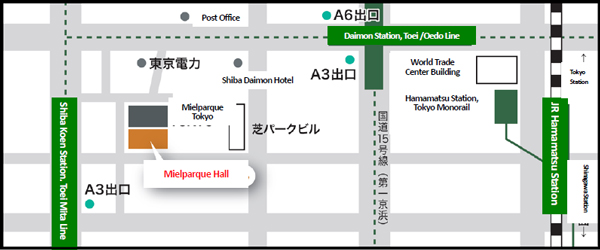
Tokyo Chapter: June 14 (Friday), 2013, 12:00-17:30, Mielparque Hall
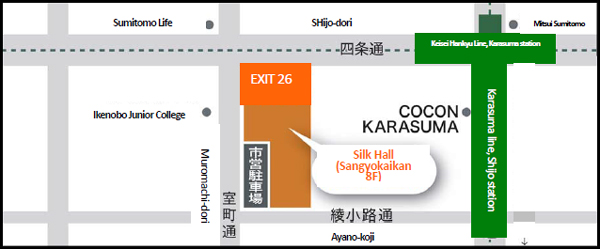
Kyoto Chapter: June 21 (Friday), 2013, 12:00-17:30, Silk Hall (Kyoto Sangyo Kaikan, 8F)

2. Program (Same for both Tokyo and Kyoto Chapters)

12:00-13:00Poster Session (19 poster displays)
13:00-Opening Address, NIES President SUMI, Akimasa
13:10-First Lecture: “Changes in global atmospheric carbon dioxide and methane and inference of causes as seen from the GHG observation satellite “IBUKI””, Tatsuya YOKOTA
13:50-Second Lecture: “Atmospheric substances around the globe: windborne causes of atmospheric pollution and climate change”, Seiji SUGATA
14:30-Third Lecture: “Ants around the globe – globalization and the issue of invasive alien species”, Koichi GOKA
15:10-15:25Break
15:25-Fourth Lecture: “Japan and the world connected by water – our lifestyles and the world’s water problems”, Naota HANASAKI
16:05-Fifth Lecture: “Environmental burdens accompanying the international supply chain and resource consumption”,Keisuke NANSAI
16:45Closing Remarks: Hideo HARASAWA, NIES Vice President
16:50-17:30Poster Session: * As per poster session from 12:00, but with additional participation of symposium speakers

Poster Session, Titles

  1. 1. Initiatives towards recovery and restoration from the Great East Japan Earthquake
  2. 2. Countermeasures for disaster and radioactively contaminated waste for Fukushima
  3. 3. Town planning for post-disaster regional recovery – environmental energy technologies and policy assessment tools
  4. 4. Japan Environment and Children’s Study – progress report for the nationwide survey on children’s health and the environment
  5. 5. Yellow sand from across the oceans and the health impacts of transboundary pollution
  6. 6. Study towards a toxicity evaluation method using cultured cells of suspended particulate matter
  7. 7. Particulate matter emissions from gasoline automobiles – compromises between improvement of fuel efficiency and atmospheric pollutants?
  8. 8. Short term changes in carbon dioxide concentrations in the upper atmosphere – CONTRAIL Project for atmospheric observation using commercial airlines
  9. 9. Observation of carbon dioxide concentrations in the atmosphere and ocean of the pacific
  10. 10. Impact of global warming on the Sea of Japan – extreme changes in maritime environments in the past 50 years
  11. 11. Migratory ecology of freshwater fish in the Mekong, the international waterway
  12. 12. Long-term trend monitoring of Persistent Organic Pollutants (POPs) in Japanese coastal areas – monitoring activities using bivalves
  13. 13. Monitoring study for gene recombinant rapeseed
  14. 14. Investigating the carcinogenic mechanism of inorganic arsenic
  15. 15. Improvement of household methanation devices for organic waste in the Asian region
  16. 16. Cobenefit waste water treatment technologies for environmental conservation and material cycles – appropriate treatment of molasses-based wastewater
  17. 17. Study for a new wastewater management method using bioresponse – using living organisms to test water
  18. 18. Roadmap for Asian Low Carbon Society – Ten actions toward Low Carbon Asia
  19. 19. Research on strategies for low carbon Asian cities – case study of the Iskandar Development Region, Malaysia

3. Dates, Times and Venues

Tokyo Chapter: 12:00-17:30, June 14 (Friday), 2013, Mielparque Hall, 2-5-10, Shibakouen, Minato-ku, Tokyo 105-8582, Tel: 03-3433-7221
Access: 10 Minutes walk from JR Monorail Hamatsu Station / 2 minutes walk from Exit A3, Shibakoen Station, Toei Mita Line / 4 minutes walk from Exit A3 or A6, Daimon Station, Oedo Line
map1
Kyoto Chapter: 12:00-17:30, June 21 (Friday), 2013, Silk Hall, Kyoto Sangyo Kaikan 8F, Address: Moromachi-higashihairu, Shijou-dori, Karasumaru, Shimogyouku, Kyoto City, Tel: 075-211-8341
Access: 3 minutes walk from Exit 26, Toei subway, Karasumaru line, Shijou station / Hankyu Railways, Kyoto line, Karasumaru station
map2

4. Application Method

  1. (1) Official Symposium Site
    Register for either the Tokyo or Kyoto Chapters of the NIES Public Symposium at the following page: (http://www.nies.go.jp/sympo/2013/) 
    A confirmation mail will be automatically dispatched. Please print and bring this on the day for entrance to the NIES Public Symposium.
  2. (2) Mobile Symposium Site (http://www.nies.go.jp/sympo/2013/) 
    A confirmation mail will be automatically dispatched. Please print and bring this on the day for entrance to the NIES Public Symposium.
  3. (3) Postcard/Fax
    Please write your name/contact address/contact telephone number/Fax No./Email address, and whether you wish to participate in the Tokyo or Kyoto Chapters of the NIES Public Symposium on a postcard, or fax these details to the below address/Fax No.
* In order that we can accommodate numbers, we request that you complete the application process as soon as possible
** The symposium will be recorded for our records, and put on the NIES homepage at a future date. We ask for your understanding and cooperation

5. Contact

Administrative Office, National Institute for Environmental Studies (NIES) Public Symposium 2013 Stage Inc., Takamatsu 1-1-11, Toshima-ku, Tokyo (Attn: Sagawa, Inagaki, Kagami)
Tel.: 03-3958-5292 Fax: 03-5966-5773
E-mail: info_nies2013@stage.ac

Privacy Policy

  1. a) Any personal information submitted will be subject to the NIES security polcy and will not be used for any other purposes than those related to the Public Symposium
  2. b) Any such information is being submitted to the symposium hosts, the National Institute for Environmental Studies
  3. c) Applicants may be sent information on the next symposium. However the dispatch of such information can be cancelled immediately on request.

Below: Images from the NIES Public Symposium 2012

photo
For more information: http://www.nies.go.jp/whatsnew/2013/20130419/20130419-e.html